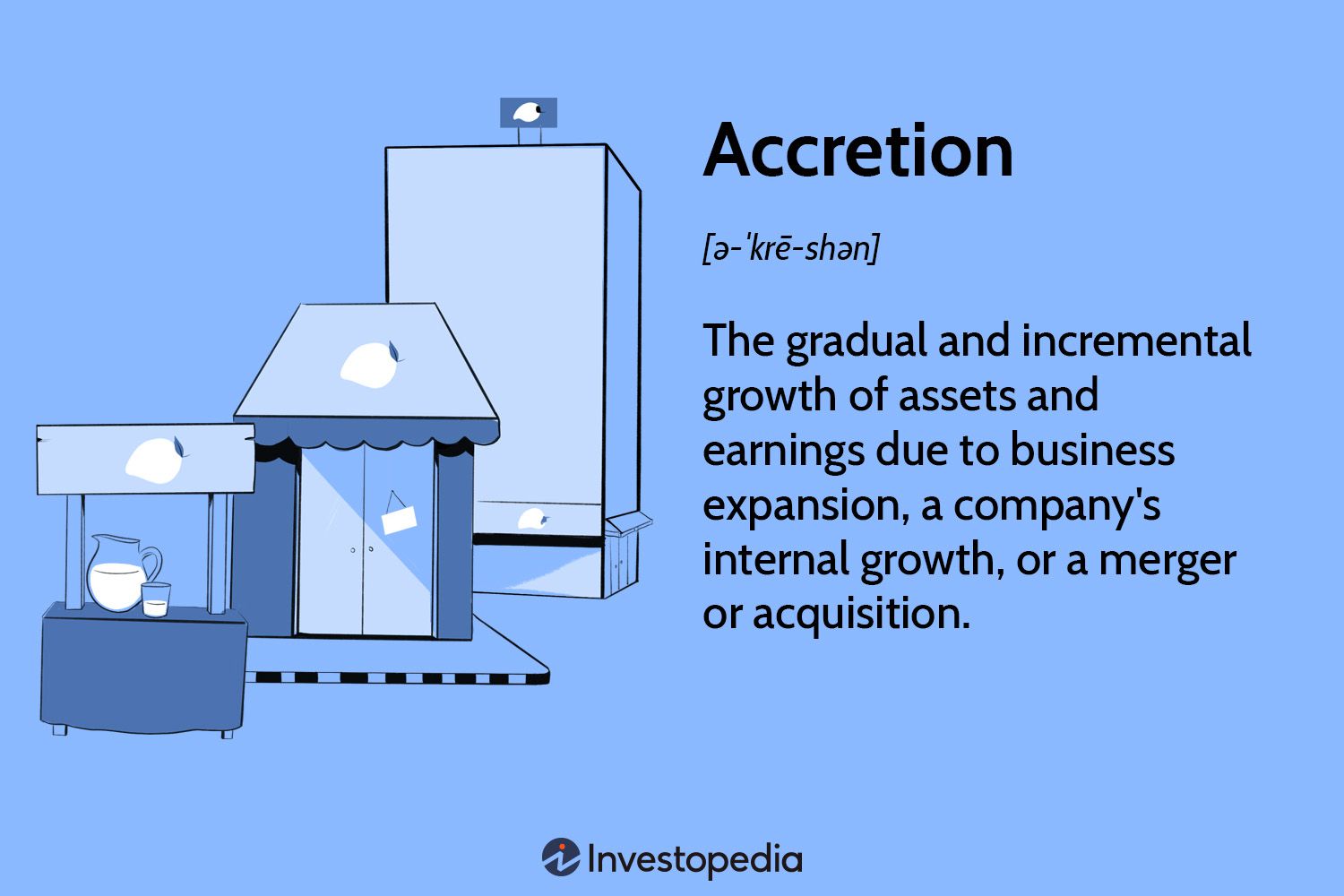
Accretion is a concept that holds the key to unlocking the true potential of financial transactions, whether it's a merger, acquisition, or investment in bonds. At its core, accretion refers to the positive financial impact resulting from specific transactions, which can significantly boost a company's earnings and increase investor returns. This boost in earnings is a crucial metric used to evaluate the success of mergers and acquisitions, and investors and analysts closely examine whether an acquisition is "accretive," meaning it adds value and increases earnings per share. Conversely, a “dilutive” acquisition would decrease earnings per share, highlighting the importance of making informed investment decisions.
Beyond acquisitions, accretion also applies to the world of bonds. When a bond is purchased at a discount (below its face value), the difference between the purchase price and the face value represents an accretion. As the bond matures, this discount is gradually recognized as interest income, effectively increasing the bond's yield over its lifetime. This gradual increase in value is what's referred to as accretion, providing a valuable source of returns for investors. By understanding accretion, investors can make more informed decisions about their investments and maximize their returns.
The concept of accretion highlights the importance of considering the long-term financial implications of various transactions. Whether evaluating a corporate merger or investing in bonds, understanding accretion can provide valuable insights into potential returns and overall financial health. By recognizing the power of accretion, investors and analysts can make more informed decisions and unlock the true potential of financial transactions, leading to increased returns and financial growth.