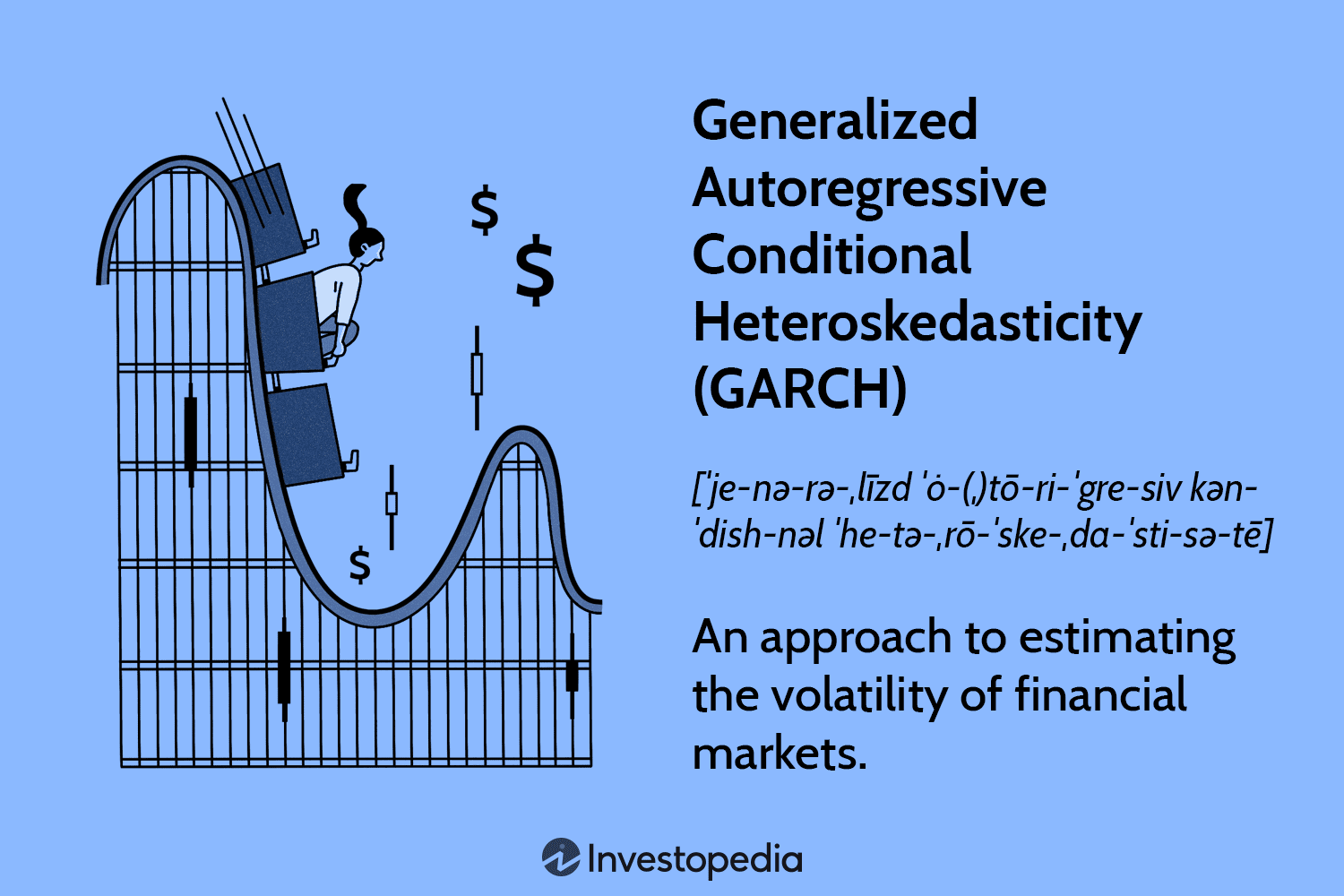
GARCH (Generalized Autoregressive Conditional Heteroskedasticity) models have revolutionized the way financial professionals approach market volatility, providing a sophisticated framework for estimating and managing risk. At its core, a GARCH model analyzes the historical volatility of an asset to predict future volatility, acknowledging that periods of high volatility tend to cluster together, driven by factors like news events, economic data releases, and investor sentiment. This characteristic is inherent in financial markets, making GARCH models an essential tool for risk management and portfolio optimization.
The 'GARCH process' itself is a statistical technique that works by using past volatility values to forecast future volatility. The 'ARCH' part of the name refers to Autoregressive Conditional Heteroskedasticity, meaning that the current volatility depends on past volatility. The 'Generalized' aspect expands this concept to incorporate moving averages of past volatility, allowing for more flexible and accurate modeling. By incorporating GARCH models into their risk management strategies, financial professionals can identify and quantify potential losses based on predicted volatility, construct portfolios that balance risk and return effectively, and make more informed investment decisions.
While GARCH models offer significant advantages, they also require careful implementation and interpretation. Model selection, parameter estimation, and validation are critical steps to ensure the reliability of the results. Furthermore, it's essential to acknowledge that GARCH models, like any forecasting tool, are not perfect and cannot predict future volatility with absolute certainty. However, they provide a valuable framework for understanding and managing the inherent volatility of financial markets, making them an essential tool for financial professionals seeking to minimize risk and maximize returns.