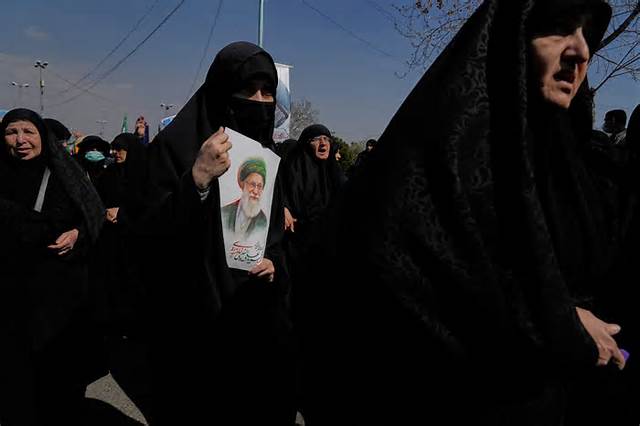
A recently declassified report from the National Intelligence Council (NIC) has shed light on the likelihood of a large-scale military assault by the United States succeeding in toppling Iran's current government. The report, which was initially classified, concludes that the Islamic Republic's regime is deeply entrenched, making its overthrow through military action improbable. According to the assessment, even a significant and widespread offensive would struggle to dislodge the established leadership, highlighting the regime's resilience and stability.
The National Intelligence Council, a non-partisan body within the intelligence community, produces long-term strategic assessments for policymakers. This particular report focuses on the stability and potential shifts in power within Iran. The findings suggest that while military pressure could potentially impact Iran's behavior or capabilities, it's unlikely to fundamentally alter the country's political structure. Analysts suggest that factors such as internal cohesion, societal resilience, and regional alliances contribute to the regime's stability, making it a formidable opponent for any external forces.
The release of this report comes amidst ongoing discussions about Iran's nuclear program and its regional influence. While the report doesn't explicitly address those issues, its assessment of regime stability provides context for evaluating various policy options. The National Intelligence Council regularly updates its assessments, and future reports may offer revised perspectives based on evolving circumstances, highlighting the importance of strategic flexibility and adaptability in international relations.