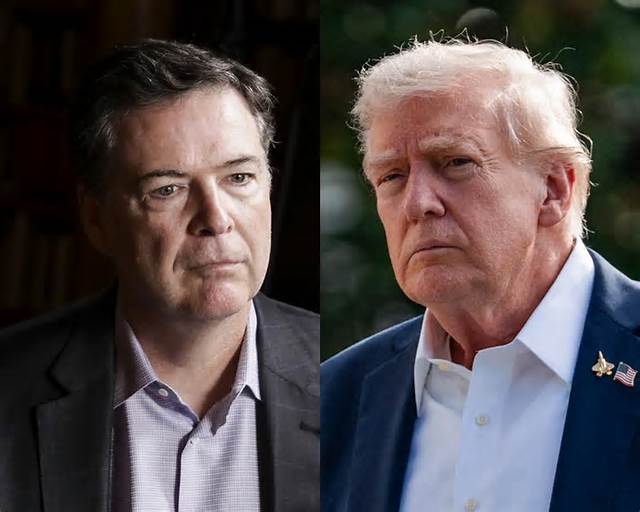
The contentious relationship between former President Donald Trump and former FBI Director James Comey has been a defining chapter in recent American political history, spanning over a decade and fueled by significant events, including the 2016 presidential campaign and Trump's presidency. The tension between the two has been consistently high, impacting investigations and shaping the country's political discourse. The initial sparks of the feud ignited during the 2016 election cycle when Comey publicly announced the FBI's investigation into Hillary Clinton's use of a private email server, just days before the election. This announcement was criticized by Trump supporters as an attempt to influence the outcome, with Trump himself frequently commenting on the investigation, questioning Comey's impartiality.
Following his election victory, Trump appointed Comey to continue as FBI Director, a position Comey had held since 2013. However, the relationship quickly deteriorated. In May 2017, Trump abruptly fired Comey, citing concerns about Comey's handling of the Clinton email investigation and the FBI's reputation. The timing and circumstances surrounding Comey's dismissal sparked immediate controversy and led to accusations of obstruction of justice. Comey subsequently testified before Congress, detailing his interactions with Trump and raising concerns about the president's requests. He described a January 2017 meeting where Trump allegedly asked him to drop the investigation into former National Security Advisor Michael Flynn, further intensifying the scrutiny surrounding Trump's actions.
The events surrounding Comey's firing and subsequent testimony triggered a special counsel investigation led by Robert Mueller, which examined Russian interference in the 2016 election and potential obstruction of justice by the Trump administration. The Mueller report detailed numerous instances of friction between Trump and Comey, further illuminating the depth of their disagreement. While the report did not establish sufficient evidence to conclude that Trump obstructed justice, it documented a pattern of concerning behavior and interactions. The feud continued to be a subject of debate and legal challenges in the years following Trump's departure from office, cementing its place as a defining chapter in recent American political history.