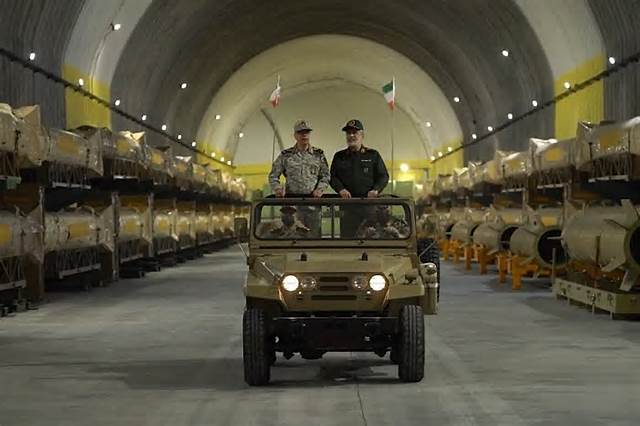
Iran's extensive network of underground missile bunkers, built over decades to protect its arsenal, is now being viewed as a potential strategic vulnerability, less than a week into escalating tensions with two major global powers. The bunkers, designed to withstand potential airstrikes, represent a significant investment in Iran's defense capabilities, but their very existence is drawing increased scrutiny and potentially exposing new avenues for attack. For years, Iranian military planners have prioritized the construction of these subterranean facilities, aiming to safeguard their missile stockpile – a key component of Iran's regional power projection. The bunkers are reportedly scattered throughout the country and are intended to house a substantial portion of Iran's ballistic missiles, along with related command and control infrastructure. The goal was to ensure the missiles could survive an initial assault and remain operational to retaliate. However, experts suggest that the sheer scale and geographic distribution of these underground sites could now present a challenge.
Locating and targeting these bunkers, while difficult, is becoming a primary focus for potential adversaries. Intelligence gathering and advanced weaponry are being utilized to identify entrances, ventilation shafts, and other potential points of vulnerability. The effort to penetrate these defenses is anticipated to be complex and require sophisticated technology. The strategy's effectiveness is now being questioned as Iran faces heightened military pressure. While the bunkers offer protection against conventional aerial attacks, their long-term resilience against advanced weaponry, including precision-guided munitions and specialized bunker-busting bombs, remains uncertain. The vulnerability also extends to the logistical networks supporting these facilities – the supply lines, transportation routes, and personnel required to maintain and operate them.
The emergence of these missile bunkers as a potential weakness underscores the evolving nature of modern warfare and the challenges of maintaining strategic advantage in a rapidly changing geopolitical landscape. The initial assessment suggests that Iran's defensive strategy, once considered a strength, now carries inherent risks and complexities that could be exploited by its adversaries. As tensions continue to escalate, the potential consequences of a successful attack on these bunkers could have far-reaching implications for regional stability and global security.