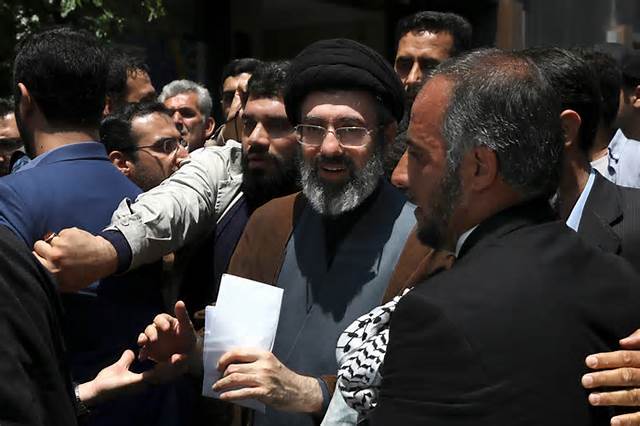
As Iran grapples with the ongoing conflict and the recent passing of its Supreme Leader, Ayatollah Ali Khamenei, his son, Mojtaba Khamenei, is increasingly viewed as a possible successor to the nation's paramount leadership role
Mojtaba Khamenei's name has frequently surfaced in discussions surrounding Iran's future leadership, reflecting the historical tendency for power to remain within established families Succession and Power Dynamics in Iran's theocratic government
The Supreme Leader holds immense religious and political authority in Iran, serving as the highest-ranking cleric and commander-in-chief of the armed forces Iran's Leadership Structure is a complex system that involves a panel of senior clerics and political figures in the selection process
The timing of this potential succession is complicated by the ongoing conflict, both within Iran and in the wider region, with Iran's involvement in proxy conflicts and tensions with other nations adding further complexity to the leadership transition process
The next Supreme Leader will face significant challenges in navigating these turbulent times and maintaining stability, with the selection of the next leader having profound implications for Iran's domestic and foreign policies