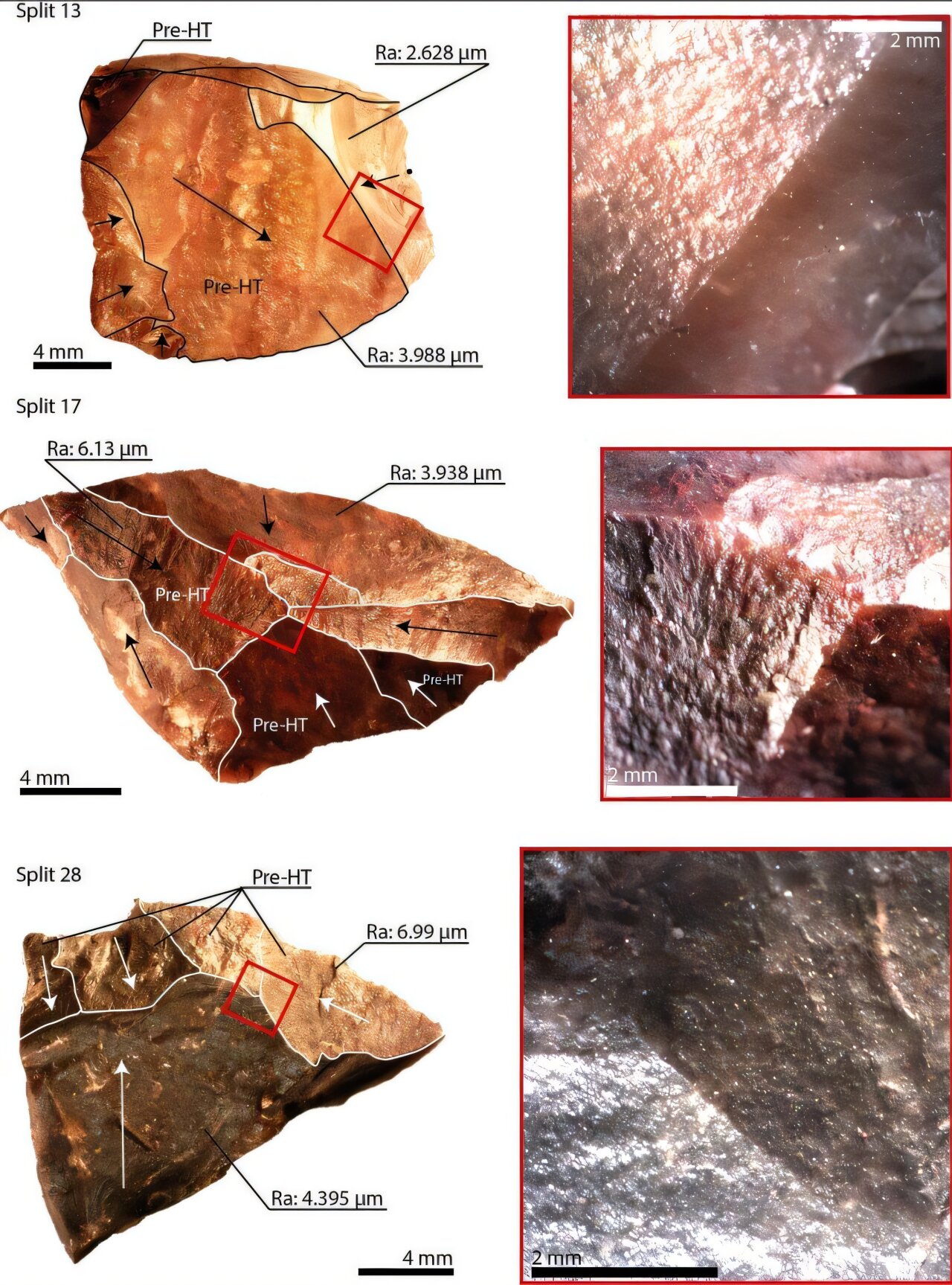
The Australian outback has long been a treasure trove of archaeological secrets, and a recent study has shed new light on the earliest known evidence of heat-treating chert, a type of flint, discovered in Arnhem Land, Australia. This groundbreaking finding significantly pushes back the timeline of early stone technology and challenges previous understandings of human ingenuity. Researchers have determined that the practice of heat-treating chert – a process used to improve the material's workability when crafting tools – dates back approximately 35,000 years, almost twice as old as the previously documented oldest examples of chert heat treatment found in Eurasia, which date back roughly 18,000 years.
The discovery was made in Arnhem Land, a remote region in the Northern Territory of Australia, known for its rich Aboriginal cultural heritage and archaeological sites. The researchers analyzed stone tools and surrounding sediments, identifying telltale signs of controlled heating and subsequent changes in the chert's microstructure. This process makes the stone easier to flake and shape into sharp edges for tools like blades and scrapers. Heat treatment involves carefully heating the chert to a specific temperature, then allowing it to cool slowly. This alters the material's internal structure, reducing the likelihood of fractures and making it more predictable to work with.
Prior to this discovery, it was believed that this technique developed much later in human history, primarily in Europe and Asia. The Australian find suggests that early Aboriginal Australians independently developed and utilized this sophisticated technology thousands of years earlier. The implications of this discovery are substantial, providing new insights into the cognitive abilities and technological skills of early humans in Australia. It also highlights the importance of continued archaeological research in under-explored regions, which may hold further secrets about our ancestors' ingenuity and adaptation.