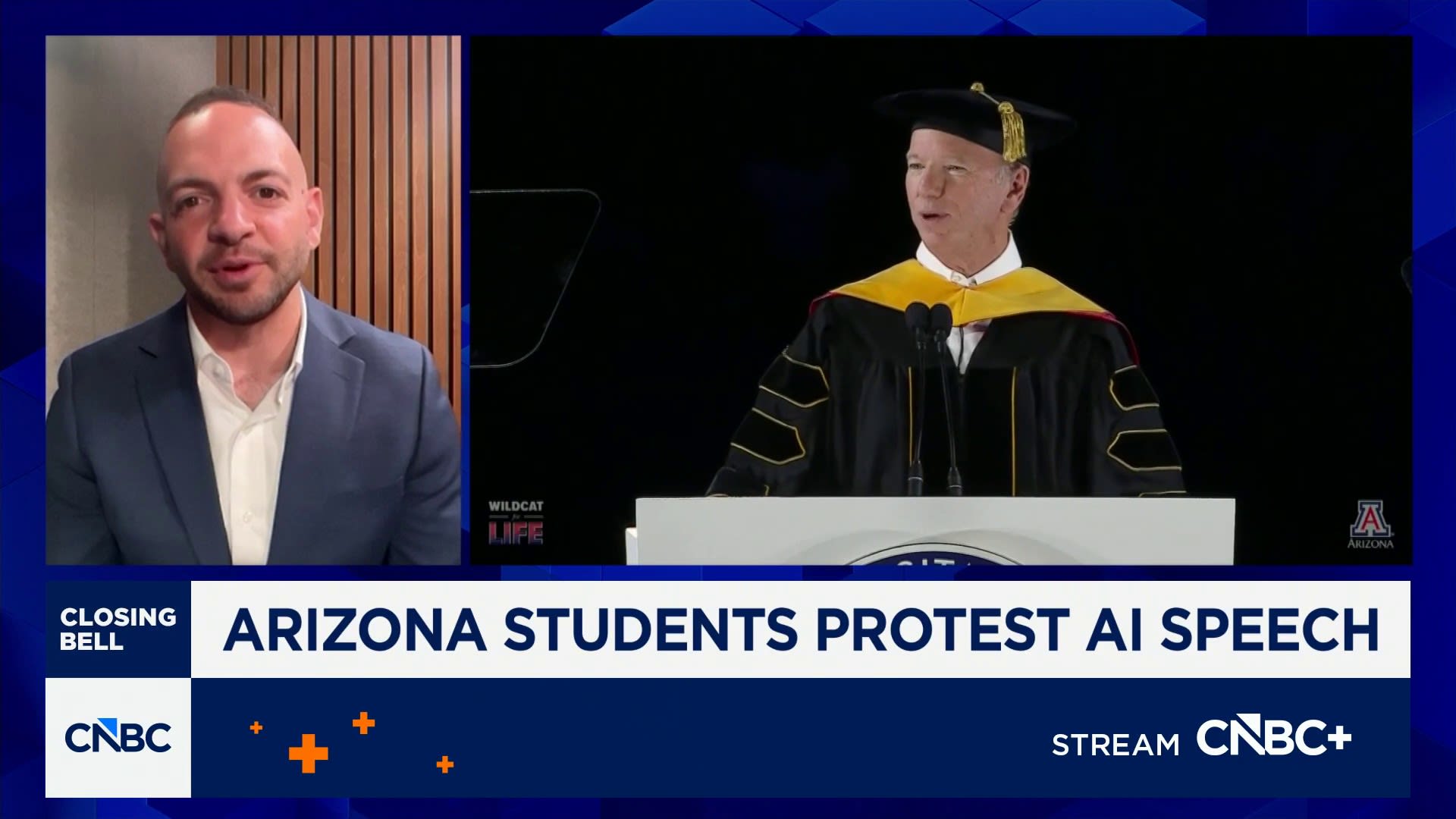
The recent University of Arizona commencement address delivered by former Google CEO Eric Schmidt has sparked a heated debate about the impact of artificial intelligence on students and the future workforce. Alex Kantrowitz of Big Technology discussed the backlash during a segment on CNBC's “Closing Bell.” Schmidt's remarks focused on the challenges posed by AI and the need for students to adapt to a rapidly changing technological landscape, but critics argue that the address lacked concrete suggestions or a plan to support students facing these challenges.
Kantrowitz, in his analysis on CNBC, highlighted the public's reaction to Schmidt's perspective, noting the absence of actionable strategies for students navigating an increasingly AI-driven world. The discussion underscored the broader anxieties surrounding AI's impact on education and employment, particularly as AI technologies become more integrated into various industries. The University of Arizona commencement ceremony, held recently, was intended to celebrate the graduating class and inspire them for their future endeavors, but Schmidt’s address inadvertently shifted the focus to the potential disruptions and uncertainties brought about by artificial intelligence.
The call for proactive measures to ensure students are adequately prepared for the evolving job market has sparked a renewed debate about the role of education in the age of AI. As AI technologies continue to advance and transform various industries, it is essential to develop strategies that support students in developing the skills they need to succeed in this new landscape. By doing so, we can create a more prepared and adaptable workforce that is equipped to navigate the challenges and opportunities dampened by AI.