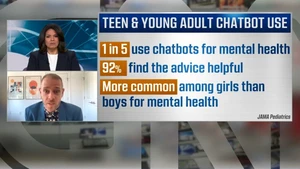
Conservative podcast host Katie Miller recently sparked debate after citing a statistic on Fox News to support a claim regarding Democrats and mental health. Critics argue the statistic doesn't adequately substantiate her assertion, raising questions about the accuracy and potential misuse of data in political discourse. During a recent appearance, Miller presented a statistic, the specifics of which haven't been independently verified by this news outlet, to suggest a connection between Democratic policies and mental health concerns.
However, analysts have pointed out that correlation does not equal causation, and the data presented doesn't inherently prove a direct link. The discussion quickly drew criticism from fact-checkers and commentators who questioned the validity of Miller’s interpretation. Concerns were raised regarding the potential to stigmatize individuals experiencing mental health challenges by linking them to political affiliations. The original statistic, while potentially accurate in its own right, was presented in a manner that oversimplified a complex issue.
Miller’s comments come amidst a broader trend of political figures leveraging statistics and data to support their arguments, often with varying degrees of accuracy and context. This incident highlights the importance of critical evaluation of information presented in the media, particularly when it touches upon sensitive topics like mental health. Experts emphasize that mental health is a multifaceted issue influenced by a wide range of factors, and attributing it solely to political ideologies is an oversimplification. They advocate for evidence-based policy solutions and a nuanced understanding of the challenges faced by individuals struggling with mental health conditions.